Rick Anderson: The Veteran Strategist Who Helped Shape Modern Canadian Politics
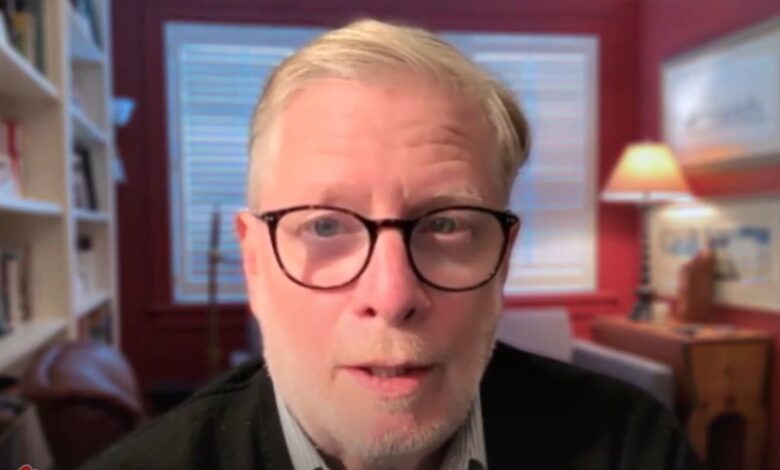
Rick Anderson is a Canadian political strategist, public affairs commentator and consultant whose career stretches across party politics, government, media, business and policy advocacy. Over several decades, he has built a reputation as one of the more experienced behind-the-scenes figures in Canadian public life. Public professional profiles currently describe him as publisher of Kathari.News, principal of e4 Strategies and a Senior Fellow at the C.D. Howe Institute, while the Institute itself lists him as a Senior Fellow and a member of its Energy Policy Council.
He is from Quebec, with public biographies describing him as a native of Montreal and Valleyfield. One point worth noting is that his exact birth date is not widely published in the major public profiles and biographies now available, so articles that claim a precise age should be treated carefully unless they cite a solid source. What is clear is that he entered federal politics very young and was already active in campaigns in the mid-1970s.
That early start matters because it explains why his career has touched so many phases of Canadian political life. He was first drawn to the Liberal Party during the Pierre Trudeau era, worked in campaign politics, and then moved onto Parliament Hill. Those experiences gave him a practical education in how parties organize, how messages are built, and how political power is managed behind closed doors.
Rick Anderson Political Career
From Liberal roots to national campaign work
The first chapter of his political story is rooted in Liberal politics. Public biographies say he gained campaign experience in the 1974 federal election, then worked at the national headquarters of the Liberal Party of Canada before moving to Parliament Hill. He later worked as a special assistant and also participated in Pierre Trudeau’s 1979 election tour. That path placed him close to both electoral machinery and government operations at an unusually early stage in life.
In the 1980s, he remained active in political strategy and leadership contests, helping on campaigns tied to figures such as Don Johnston, John Turner and Paul Martin. This period showed that he was not simply a partisan foot soldier. He was becoming a strategist with a broader grasp of leadership politics, voter persuasion and coalition-building. That reputation would become even more visible when Canadian conservatism began to reorganize in the 1990s.
The Reform Party years
One of the defining parts of his career came after he moved away from the Liberals and became heavily involved with the Reform Party of Canada. Public biographies credit him with directing Reform’s national campaigns in 1993 and 1997, the period in which the party rose from a fringe parliamentary presence to Official Opposition. In simple terms, that means he played a major role during one of the most important realignments in recent Canadian political history.
He was also involved in the United Alternative effort that sought to unite the right in Canada. While political history is always shaped by many people at once, his name appears repeatedly in accounts of the organizing and strategic work that helped lay the groundwork for what eventually became today’s Conservative Party of Canada. That makes him more than a commentator on politics; he is someone who helped influence the structure of the political system itself.
Democratic reform and public policy engagement
His record is not limited to party warfare. Public sources also connect him with democratic reform work, including support for proportional representation and roles with Fair Vote Canada. Fair Vote Canada’s board page lists him on its National Advisory Board, and Carleton University has described him as a former Liberal who became Reform’s national campaign director and taught in the Riddell Graduate Program in Political Management. Those details reinforce an important point: he has spent much of his career not only fighting elections but also thinking about how political systems function.
Rick Anderson in Business, Media and Energy Policy
Strategic communications and executive leadership
Outside electoral politics, he built a long career in communications and business strategy. Public biographies say he spent years in senior roles at Hill & Knowlton and then launched his own consulting practice. He also served as president and chief executive of Zip.ca and later held executive roles connected to larger corporate and investment organizations. This blend of politics, communications and business strategy helps explain why he is often described as a public affairs consultant rather than only a partisan operative.
His more recent public profile shows a strategist who has shifted strongly toward policy, energy transition and institutional advisory work. Current public profile summaries describe him as principal of e4 Strategies and publisher of Kathari.News, while the C.D. Howe Institute lists him as a Senior Fellow and member of its Energy Policy Council. A Canada 2020 summit programme also identified him with the Net-Zero Leadership Initiative and the C.D. Howe Energy Policy Council, showing that his present work sits at the intersection of economics, energy and public policy.
Media commentary and public visibility
He has also been visible in the media for many years. Public biographies note frequent commentary on national affairs, including appearances associated with CBC and CTV, and analysis during federal election coverage. That media work helped make him known beyond political insiders. Rather than staying hidden as a backroom operator, he became one of those strategists who could both shape political arguments and explain them to the public.
That dual identity still defines his public image. He is part consultant, part strategist, part policy voice and part commentator. In a media environment where many figures are known only for one lane, his profile is broader. He can appear in debates about elections, democratic reform, energy transition, the economy or public affairs because his background spans all of them.
Rick Anderson Wife
For many readers, personal life is part of the interest as well. He is married to Dawna Friesen, the Canadian television journalist best known as the chief anchor and executive editor of Global National. The marriage is public and well documented. The Hill Times reported that the Ottawa strategist married the Global National anchor in Vancouver on July 28, 2018, with Liberal MP Rob Oliphant officiating.
That relationship has made them a notably high-profile Canadian media and politics couple. She brings national visibility from broadcast journalism, while he brings long experience from political strategy and policy work. Even so, both are usually known first for their professional records rather than for celebrity-style coverage, which is one reason public interest in them often centres on biography, influence and career rather than gossip.
Rick Anderson Twitter
Rick Anderson also maintains an active public presence on X, formerly Twitter, under the handle @RickAnderson. Public search snippets from that profile describe his interests as politics, economics, energy, environment, Indigenous relations, technology and sports, along with the familiar disclaimer that opinions are personal and reposts are not endorsements. In other words, his social media presence mirrors his career: wide-ranging, policy-heavy and unapologetically political.
His social presence matters because it extends his role beyond boardrooms, panels and private briefings. It gives him a direct line into public debate and allows followers to see what issues he is tracking in real time. For anyone searching “rick anderson twitter,” the main takeaway is that his account reflects the same mix of public affairs, strategic thinking and commentary that has defined his professional life for decades.
Why Rick Anderson Still Matters
What makes him notable is not just longevity. Plenty of people spend a long time around politics without leaving a distinct imprint. His significance comes from the range of arenas in which he has operated: Liberal politics, Reform politics, conservative realignment, democratic reform debates, media analysis, communications consulting, business leadership and, more recently, energy transition and policy work. Few Canadian strategists have moved through that many worlds while remaining publicly recognizable.
He also represents a type of political figure that is increasingly rare: someone who understands both institutional politics and public messaging from the inside. He has worked in campaigns, government, advisory roles, think-tank settings, university-linked programmes and media commentary. That breadth gives context to why his name still appears in discussions of Canadian political strategy and policy.
Conclusion
Taken together, the public record presents a portrait of a seasoned Canadian strategist whose influence has extended well beyond a single party or a single era. He began in Liberal politics, helped drive the rise of Reform, became part of the broader story of conservative realignment, built a substantial communications and consulting career, and now occupies a visible place in policy and energy discussions. Add his marriage to Dawna Friesen and his active X presence, and it becomes clear why interest in his biography remains strong. Rick Anderson is not just a commentator on Canadian politics. He is one of the people who helped shape it.
You may also like: Keri Adams
Frequently Asked Questions
1. Who is Rick Anderson?
Rick Anderson is a Canadian political strategist, public affairs consultant, and commentator known for his work in political campaigns, public policy, and media analysis in Canada.
2. Is Rick Anderson married?
Yes, Rick Anderson is married to Canadian television journalist Dawna Friesen, the chief anchor and executive editor of Global National. They married in July 2018.
3. What is Rick Anderson known for in politics?
Rick Anderson is known for his role as a political strategist and campaign director, particularly with the Reform Party of Canada, where he helped guide national election campaigns and political strategy.
4. What does Rick Anderson say about politics and economics?
Rick Anderson often discusses politics, economics, energy policy, and environmental issues in his public commentary, focusing on policy development, governance, and economic strategy.